Dock Builder Website Design: Cost Factors, Red Flags, and the Best Fit for Growth
A dock builder’s website has a harder job than most small business sites. It cannot simply look respectable. It has to reassure a property owner spending real money on a structural project, answer practical questions quickly, and make it easy to take the next step from a phone in the middle of a busy day. If it misses on any of those points, leads leak out quietly.
That is why dock builder website design deserves a more practical conversation than the usual talk about colors, fonts, and homepages. The real questions are simpler and more important. How much does a contractor website cost? What are you actually paying for? When is a cheap option perfectly acceptable, and when does it start costing you jobs? And what signs tell you that your current site is holding your growth back?
I have seen contractors get stuck at both extremes. One owner overbought, paying for custom click here work his team never used. Another went too cheap, ended up with a site that looked passable on desktop, but made it awkward for mobile visitors to call, request a quote, or even figure out whether the company served their area. The website did not fail dramatically. It just underperformed every single week.
What makes a dock builder website different
Dock construction is not an impulse service. Customers are evaluating trust, competence, and fit before they ever pick up the phone. They want to know what kind of work you do, whether you handle projects like theirs, and how easily they can reach you. If they are standing by a shoreline or talking with a spouse on the weekend, they are usually on mobile. That point matters more than many contractors realize.
Google’s guidance for business websites is blunt in the best way. Keep content current, make the site mobile-friendly, and show contact information prominently. That sounds basic, but it cuts straight to what often separates a site that helps sales from one that just exists.
For dock builders, those basics carry even more weight because the service itself is highly visual and highly local. People want confidence. They want to feel that the company understands projects like boathouse access, waterfront conditions, repairs, rebuilds, or custom installations, even if the site does not explain every technical detail. If the website feels old, vague, or hard to use, trust drops fast.
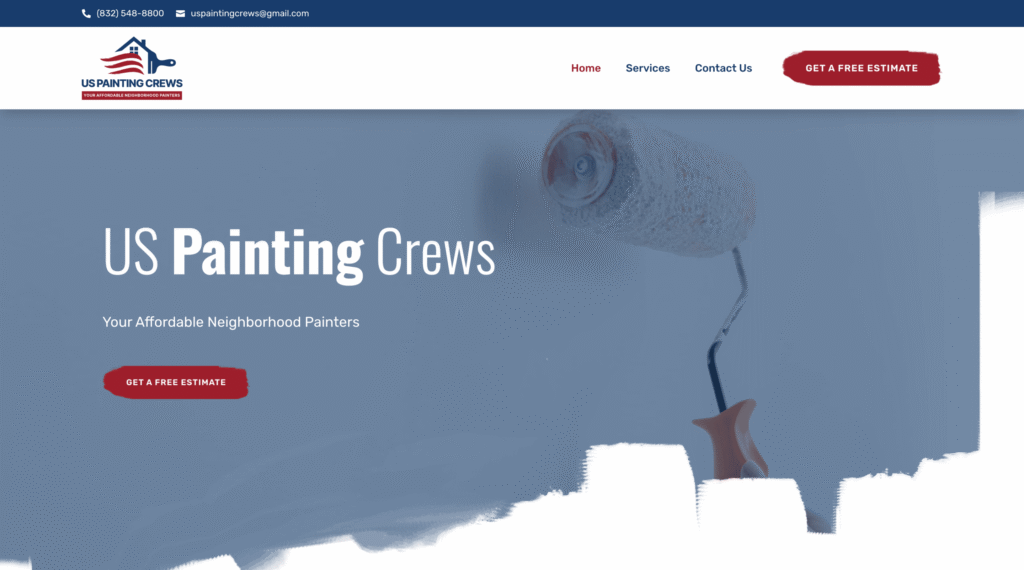
This is also why a contractor website redesign is often about business performance, not vanity. A stronger site can clarify services, improve mobile usability, and make customer actions more obvious. A weaker one can bury your phone number, send visitors through awkward navigation, and make your company seem smaller or less established than it really is.
The honest answer to cost
If you are asking how much does a contractor website cost, the honest answer is that there is no universal price. Costs vary widely based on design, features, functionality, and ongoing maintenance. That is not a dodge. It is simply the nature of websites.
The biggest split in pricing comes from the path you choose to build it. A contractor website can be done as a DIY project, through a freelancer, through an agency, or through a managed subscription model. Each path shifts the balance between upfront cash, customization, convenience, strategy, and support.
DIY builders are usually the most budget-friendly route. If your goal is a credible online presence with your contact details, a few service pages, and a basic lead form, this can be enough. That is especially true for a newer company trying to get online quickly without a large investment. A low-cost setup is not automatically a bad decision. If the site is current, mobile-friendly, and easy to contact, it can absolutely do its job.
Where DIY often starts to strain is when the owner is already overloaded. The site may launch, but then updates get delayed, content stays thin, photos never improve, and important conversion details get overlooked. That is not a software problem. It is a time problem.
Freelancers sit in the middle. A web designer for contractors can help with design, setup, and custom touches without the overhead of a larger firm. This option often makes sense when you want a more polished result than DIY, but you do not need broad strategic work or complex functionality. For many home service businesses, that is a reasonable middle ground.
Agencies tend to fit when you need more than design alone. If your project calls for broader strategy, custom development, or more complex functionality, an agency is often the right tool. The tradeoff is cost. Project fees can move from the low thousands into much higher territory depending on scope.
Then there is the managed model, which is increasingly attractive for contractors. A managed website for small business typically bundles hosting, security, backups, updates, and support into one ongoing service. This appeals to owners who do not want to piece together vendors or worry about maintenance tasks. In practical terms, you are paying not just for a website, but for someone to keep it running and current.
What actually drives the price up or down
Price usually follows complexity, not hype. Two sites can both be called “contractor websites” and have completely different needs.
Here are the main factors that move a project up or down in cost:
- how custom the design and page structure need to be
- how much functionality is required beyond basic lead capture
- how much strategy, content setup, and support you expect
- whether maintenance, hosting, security, and updates are bundled
- whether you need a one-time build or ongoing management
A dock builder with a small service area and straightforward services may need a very lean site. Another company may want a more tailored experience, stronger messaging, more support, and someone responsible for updates over time. Both are valid. Problems start when owners pay for one model while expecting the outcomes of another.
I have watched this happen in subtle ways. A contractor hires a low-cost designer expecting strategic guidance, lead-focused structure, and long-term help. The designer delivers a decent-looking site, but that was never the package. On the other side, some businesses hire a full custom team when all they really need is a professional, managed presence that can go live quickly and stay maintained.
That mismatch is where frustration lives.
Cheap is not the same as wrong
There is a strain of website advice that treats low-cost options as if they are amateur by definition. That is not how the real world works. A simpler website can be a smart move when the business mainly needs credibility, contact information, and basic lead capture.
If you are a dock builder early in growth, a basic site may be enough to support referrals, local search visibility, and direct inquiries. What matters is that the information is current, the site works well on phones, and the contact path is obvious. A cheap site that is usable is usually better than an expensive site that is late, bloated, or hard to maintain.
The issue is not low cost. The issue is low usefulness.
This applies beyond dock builders too. I have seen the same dynamic in pool screen enclosure website design, concrete coating website design, epoxy flooring website design, mold remediation website design, home remodeling website design, and flooring contractor website design. Different trades, same reality. Customers are not grading artistic ambition. They are trying to decide whether to trust you and how quickly they can reach you.
When a dock builder should hire a pro
There is a point where owner-built or bargain-built sites start to drag on growth. Usually it shows up before the owner can name it clearly. Leads feel inconsistent. Visitors call with basic questions the site should answer. The team hesitates to send traffic to the website because it no longer reflects the quality of the business.
That is when hiring a professional starts making sense.
A freelancer can be a good fit if you want design help, setup assistance, and some custom touches. An agency makes more sense when you need broader strategy or complex functionality. A managed provider is often strongest when you want speed, convenience, and ongoing support without assembling multiple services yourself.
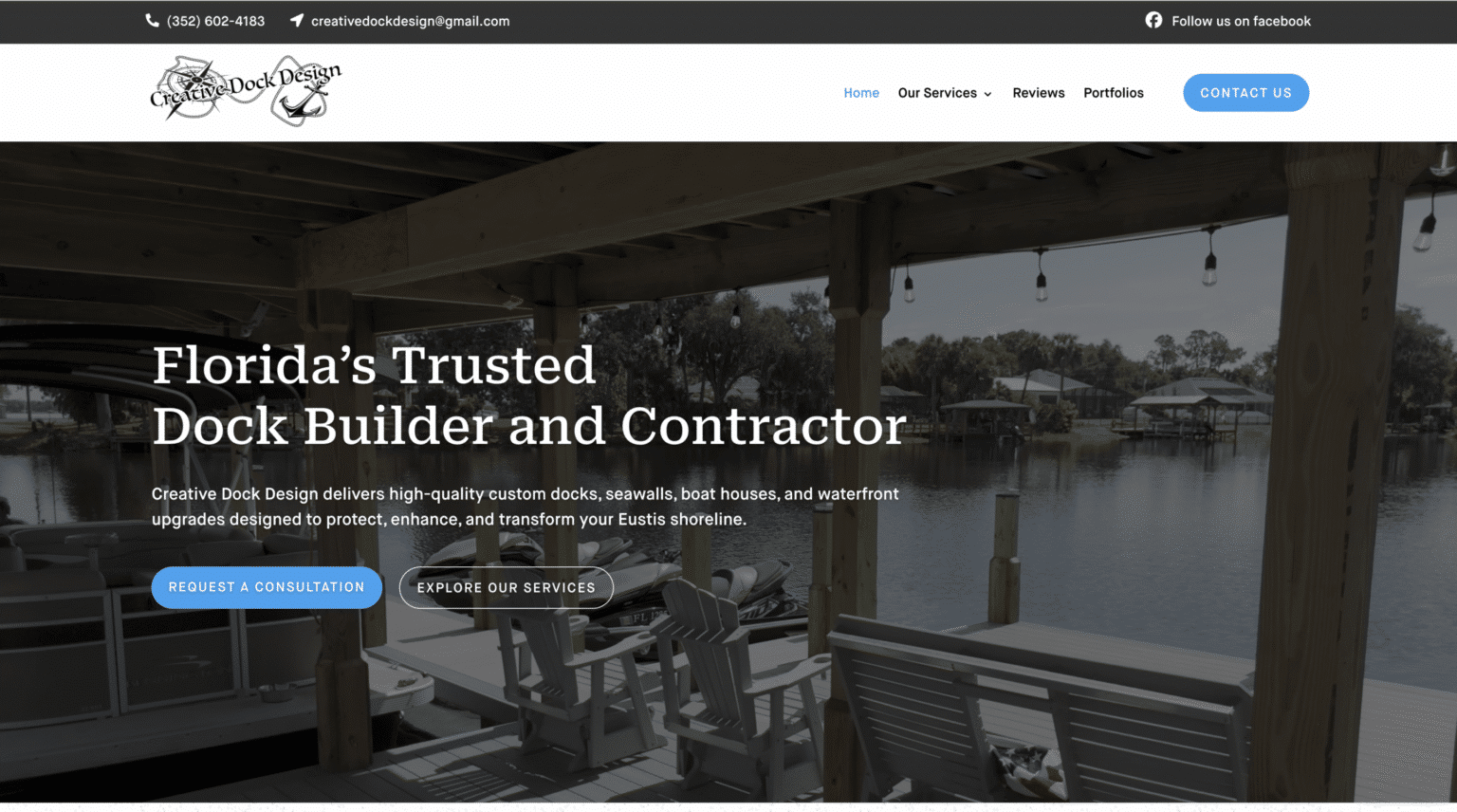
The best website builder for contractors is not one universal platform or one universal vendor type. It is the approach that matches your business stage, your budget, and your capacity to maintain it. If you enjoy hands-on control and your needs are simple, DIY may fit. If you want someone to execute your vision with polish, a freelancer may be enough. If you need strategic depth or advanced features, an agency may be worth the investment. If you want a site professionally handled month after month, a managed website for small business is often the cleaner answer.
Red flags that should not be ignored
Most contractor sites do not fail because of one catastrophic flaw. They fail by making small things harder than they should be. Customers notice that friction immediately, even if owners stop seeing it.
These are the signs that usually justify a serious contractor website redesign:
- the site shows outdated information, old offers, or stale announcements
- mobile visitors struggle to navigate or contact you
- phone number, service area, or inquiry options are hard to find
- pages feel confusing, thin, or difficult to move through
- the site looks fine at a glance but does not support real customer actions
Google’s guidance lines up with this. Outdated information erodes trust. Weak mobile usability creates friction. Contact details should be prominent. Revisions should be made from the customer’s point of view, not the owner’s.
That last point is where many redesigns go wrong. Owners focus on whether the site feels “modern” while overlooking whether it makes the next step obvious. A website is not a framed brochure. It is a working sales tool. A page matters because of what it helps a customer do.
Design matters, but conversion matters more
The easiest trap in contractor web projects is confusing appearance with performance. A polished visual design can help trust, certainly. But the site should be judged by whether it supports conversion and customer tasks.
Google’s definition of a conversion page is useful here. It is a page someone reaches after completing an action you value. For a dock builder, that action might be a quote request, a call, or a form submission. If your pages are not helping visitors reach those actions, the design is only doing half the job.
This is why strong contractor sites tend to feel clear before they feel clever. The layout should not hide the essentials. The visitor should quickly understand who you are, what you do, and how to contact you. On mobile, this becomes even more important. Small usability issues that seem minor on desktop can seriously reduce inquiries on a phone.
A dock builder does not need a gimmick-heavy site to grow. The business needs a site that reduces hesitation. That can be accomplished with clear messaging, current information, visible contact paths, and a mobile experience that does not get in the visitor’s way.
The tradeoff between one-time builds and managed websites
Some owners strongly prefer a one-time build because the spending feels finite. That can be appropriate, especially if the company has internal capacity to manage updates, hosting, security, and maintenance afterward. But many small businesses underestimate what “afterward” involves. A website is not really finished once it launches. It needs upkeep.
Managed options exist for exactly this reason. Hosting, security, backups, updates, and support are commonly bundled together. That is less glamorous than design talk, but often more valuable in daily operations. When something needs to change, the question is not “Who do we call?” or “Which login controls this?” The responsibility is already assigned.
For a busy dock builder, that convenience can be worth more than a lower upfront price. Instead of coordinating separate pieces, the business gets continuity. One example is Scalable Websites, a Houston, TX based managed website provider for contractors nationwide that offers professionally designed websites on a monthly subscription with hosting, security, unlimited updates, a dedicated project manager, and launches in days.
That kind of model is not the right fit for every company. Some owners want full ownership of every moving part and are willing to manage it. Others want the website handled so they can stay focused on operations and sales. Neither instinct is wrong. The point is to choose deliberately.
How to think about fit instead of chasing the lowest price
The best decision usually comes from asking practical questions, not abstract ones. Do you need a basic online presence or a more polished sales tool? Do you have time to keep content current? Will someone be responsible for edits, maintenance, and support after launch? Do you want strategic input or just execution? Those answers matter more than the label attached to the service.
I often tell contractors to think about website investment the way they think about equipment or subcontractors. The lowest price can be smart, or it can be expensive in disguise. If you hire cheap help and still have to chase updates, fix problems, and explain the basics repeatedly, the true cost is not low. If you buy a more complete service that removes friction and keeps the site current, that can be the better value even if the monthly or project cost is higher.
That is particularly true when growth is the goal. If the business is adding crews, expanding service areas, or trying to turn more traffic into actual leads, the website has to keep pace. A site built only to exist will eventually get exposed by that growth.
A practical way to choose the right path
The right website setup usually becomes obvious when you match your business reality to the build model.
A smaller or newer dock builder that mainly needs legitimacy online may do well with a lean DIY setup, provided the site stays current and mobile-friendly. A company that wants a better visual presentation and some help getting it live may be well served by a freelancer. A business with more complex needs, broader strategic goals, or custom functionality may justify an agency. And a contractor who values simplicity, support, and continuity may find the managed route the strongest fit.
What matters most is honesty about your own bandwidth. I have seen plenty of business owners say they will keep the site updated themselves. Some do. Many do not, not because they are careless, but because work, hiring, scheduling, and customer issues take over. Months pass. Then a year. Suddenly the website is no longer an asset. It is a snapshot of an older version of the company.
That is why website fit is really an operations decision disguised as a marketing decision.
Growth favors clarity, not complexity
If you strip away all the jargon, a strong dock builder website needs to do a handful of things well. It should present the business credibly, keep information current, work cleanly on mobile devices, and make contact easy. The rest depends on your growth goals and how much support you want around the site.
That is also why a redesign can be so valuable when done for the right reasons. Not to chase trends. Not to impress other contractors. To make the customer experience easier and the lead path shorter.
For a dock builder, that can mean the difference between a site that quietly helps the business every week and one that quietly costs it opportunities. The difference is rarely magic. It is usually fit, maintenance, usability, and judgment.
If you are weighing options now, resist the urge to ask only what a website costs. Ask what kind of website your business can actually use well, keep current, and grow with. That is the question that leads to a smart investment.